
One idea, three surfaces
The concept is simple: a clock where the time is the reference. At 3:16, it shows John 3:16. Delivering it was not simple, because the same idea had to live in three very different places at once, a physical device on a shelf, a store that sells it, and a cloud that ties them together. All three were built end to end.
From storefront to silicon
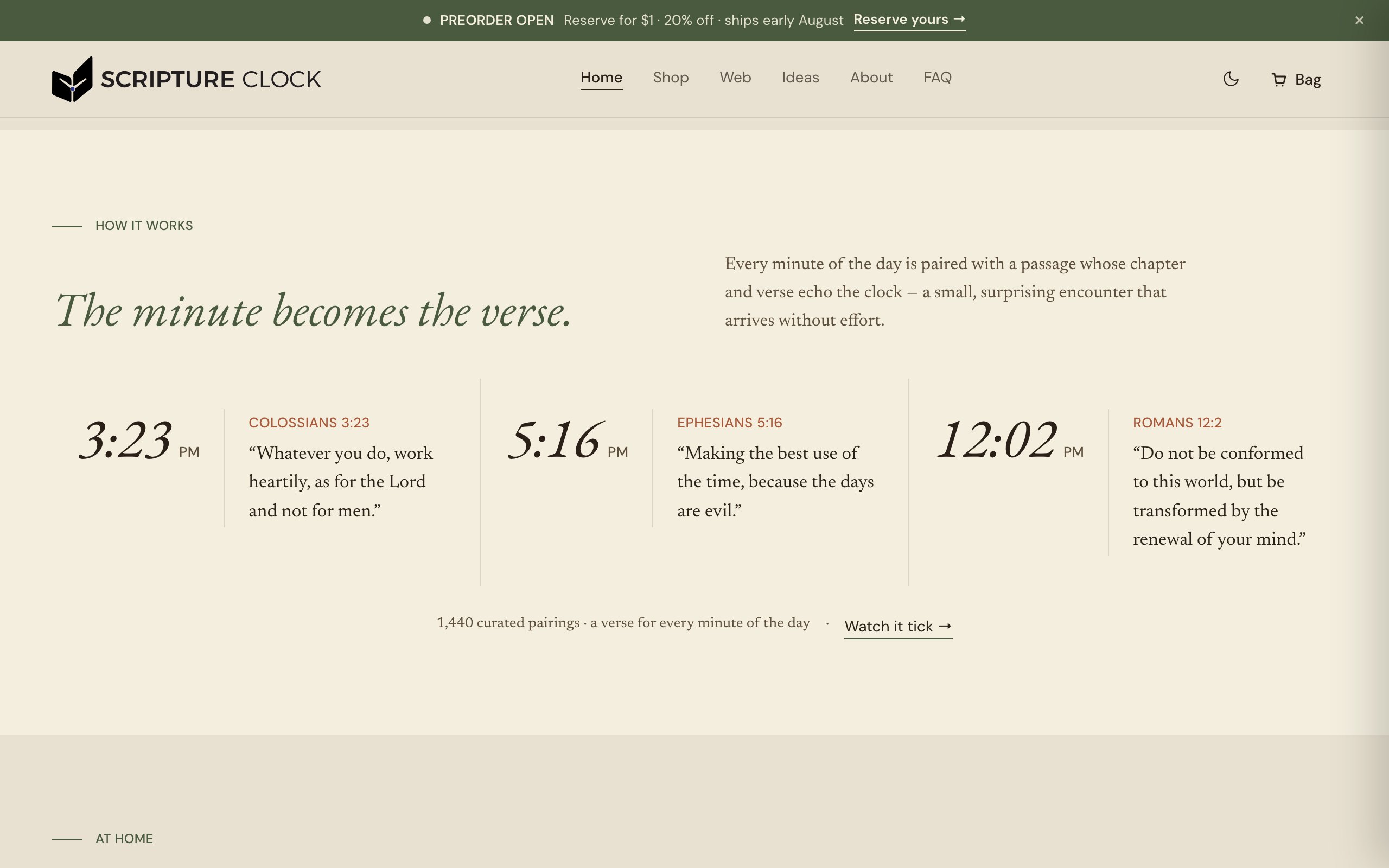
Most projects stop at the browser. This one runs from a Next.js storefront, with cart, gifting, and a two-step checkout, all the way down to hand-tuned firmware on the device. That firmware is a single source tree that compiles for four different e-paper boards, with the build configured so each board's binary contains only the code it needs and nothing else. The verse content is the same canonical set everywhere: 1,440 slots, one per minute of the day, across twenty translations, so what the website previews is literally what a device on a shelf displays.
A clock that works when the WiFi doesn't
An object that sits on a wall cannot depend on the network. Once the time is set, the clock runs fully offline, re-checking the network clock only every few hours because the onboard timekeeping barely drifts. Failed WiFi attempts back off and remember their state across deep sleep, and firmware updates are power-gated so a low battery can never brick the device mid-flash.
Keeping content and firmware in sync
New verse packs and firmware are served from object storage, verified by checksum, and written atomically, so an interrupted download never corrupts the device. A content version field lets updated verses reach every clock without shipping a new firmware release. The result is a product where the store, the cloud, and the hardware were designed as one system by one hand.